

Google is changing real estate search. Is your SEO ready?
Buyers may find the property before they ever find you. That raises the stakes for your real estate SEO strategy.
For years, real estate agents have fought for visibility in roughly the same places: Zillow, Realtor.com, brokerage websites, Google search results and, increasingly, social media.
Now Google is moving another step closer to the actual property search.
In July of 2026, Google began surfacing active real estate listings directly within mobile search results in select U.S. markets. These results can include property photos, pricing, basic listing information, maps and links to take the next step.
That means Google is changing where the buyer journey can begin, which means buyers can now discover the property before they discover the agent representing it. And for real estate professionals, that means when someone finds a home on Google and starts looking for an agent, will they find you first? That’s where real estate SEO becomes a much bigger conversation than simply ranking a website.
Property search is moving closer to Google.
Traditionally, someone looking for a home might start with a real estate portal, visit an agent’s website, or search Google for homes in a particular neighborhood. Google’s current test compresses some of those steps.
A buyer can search for real estate and encounter actual inventory inside the search experience itself. In markets where the feature is available, Google can surface property details and provide ways to continue exploring without requiring the buyer to begin on an agent or brokerage website. This shift creates a subtle but important change.
Your website may no longer be the first thing someone sees. Your search presence may be.
That includes your organic rankings, Google Business Profile, reviews, local authority, website content and the consistency of information Google can understand about you across the web. And this is why real estate SEO has to be treated as a visibility system — not a keyword exercise.
Real estate SEO is becoming more than website rankings.
When people hear SEO, they often think about getting a website onto page one of Google.
That still matters. But modern real estate SEO also needs to answer a broader question:
How much of the search experience does your business actually occupy?
Imagine a buyer searching for something like, “Homes for sale in Grandview Ohio.”
They may now encounter listings, maps, organic results, local business profiles and other search features before they ever reach a traditional real estate website.
Another Example. If someone searches for something like “real estate agent Grandview Ohio.”
That’s a completely different search — and a massive opportunity. Your goal isn’t simply to rank for property searches. It’s to make sure your name appears when that buyer transitions from looking at homes to looking for help.
That’s where local SEO becomes particularly important.
Your Google Business Profile is becoming harder to ignore.
For local real estate searches, your Google Business Profile is one of the clearest ways to establish your presence directly within Google Search and Maps.
Google specifically recognizes real estate agents as individual practitioners who may be eligible for their own Business Profile, provided they meet its requirements — including operating in a public-facing role and being directly contactable at the verified location during stated hours.
A verified Business Profile can display information such as your phone number, website, service area, photos and customer reviews directly within Google. Google also describes Business Profiles as a way for businesses to improve how they appear online and help new customers find them.
For agents, this creates a second layer of visibility beyond your website.
Your profile should give someone enough confidence to think:
This person knows this market.
That means treating it like an active marketing asset rather than a listing you set up three years ago and forgot about.
At minimum, review:
Your business name and category.
Your contact information.
Your service area or eligible location.
Your website link.
Your photos.
Your review volume and recency.
Whether the profile is actually claimed and verified.
Google also has specific practitioner rules, so agents shouldn’t simply create duplicate listings or stuff brokerage names and keywords into profile names. The profile needs to comply with Google’s eligibility and representation guidelines.
Reviews are more than just social proof.
Reviews have always helped agents build credibility. But their role becomes even more important when Google itself is one of the first places someone evaluates you. Think about the buyer journey. Someone sees a property, search for an agent, and three agents appear. One has four reviews. Another has 18. The third has dozens of recent reviews mentioning neighborhoods, responsiveness, negotiation and the buying experience.
Before anyone visits a website, a perception has already been formed.
That’s why review generation shouldn’t be treated as an occasional favor you ask from your happiest clients. It should be part of the operating system of your business. Build the ask into your closing process. Make it easy. Follow up when necessary. And continue collecting reviews over time rather than chasing a batch once every few years.
The goal isn’t a perfect five-star badge. It’s an active body of evidence showing prospective clients that real people trust you to guide them through a high-stakes decision.
Your website still matters. Its job is just changing.
None of this means an agents website is becoming irrelevant. Quite the opposite, really. The website needs to do more than display listings. Portals and search platforms are already extremely good at showing inventory. Trying to beat them purely at “here are some houses” is increasingly difficult.
Your website needs to own the things those platforms don’t.
Your expertise.
Your perspective.
Your knowledge of specific neighborhoods.
Your process.
Your track record.
Your answers to the questions buyers and sellers actually ask.
This is where SEO for real estate agents starts becoming content strategy. Instead of relying only on IDX pages, build useful pages around the markets and decisions you want to be known for.
That might include:
Neighborhood and community guides.
Local market insights.
Buying and selling resources.
Content answering common financing or transaction questions.
Pages dedicated to the specific communities you serve.
Case studies and client stories.
How should AI-powered search play into your SEO strategy?
People increasingly use tools like ChatGPT and generative search experiences to ask questions that used to require several Google searches.
Instead of asking ChatGPT, Gemini, or Claude “German Village realtor,” they’re asking things like “Who is the best real estate agent for buying a house in German Village?”
That subtle shift is why we increasingly think about SEO and Artificial Intelenece Optimization (AIO) together.
SEO helps search engines find, understand and rank your content.
AIO focuses on making your business and expertise easier for AI-powered systems to understand, reference and potentially surface within generated answers.
The underlying strategy overlaps considerably: clear content, strong topical authority, useful information and consistent signals about who you are and what you do. So the answer isn’t abandoning SEO for the next shiny acronym. It’s building a stronger digital presence that can be understood wherever people search.
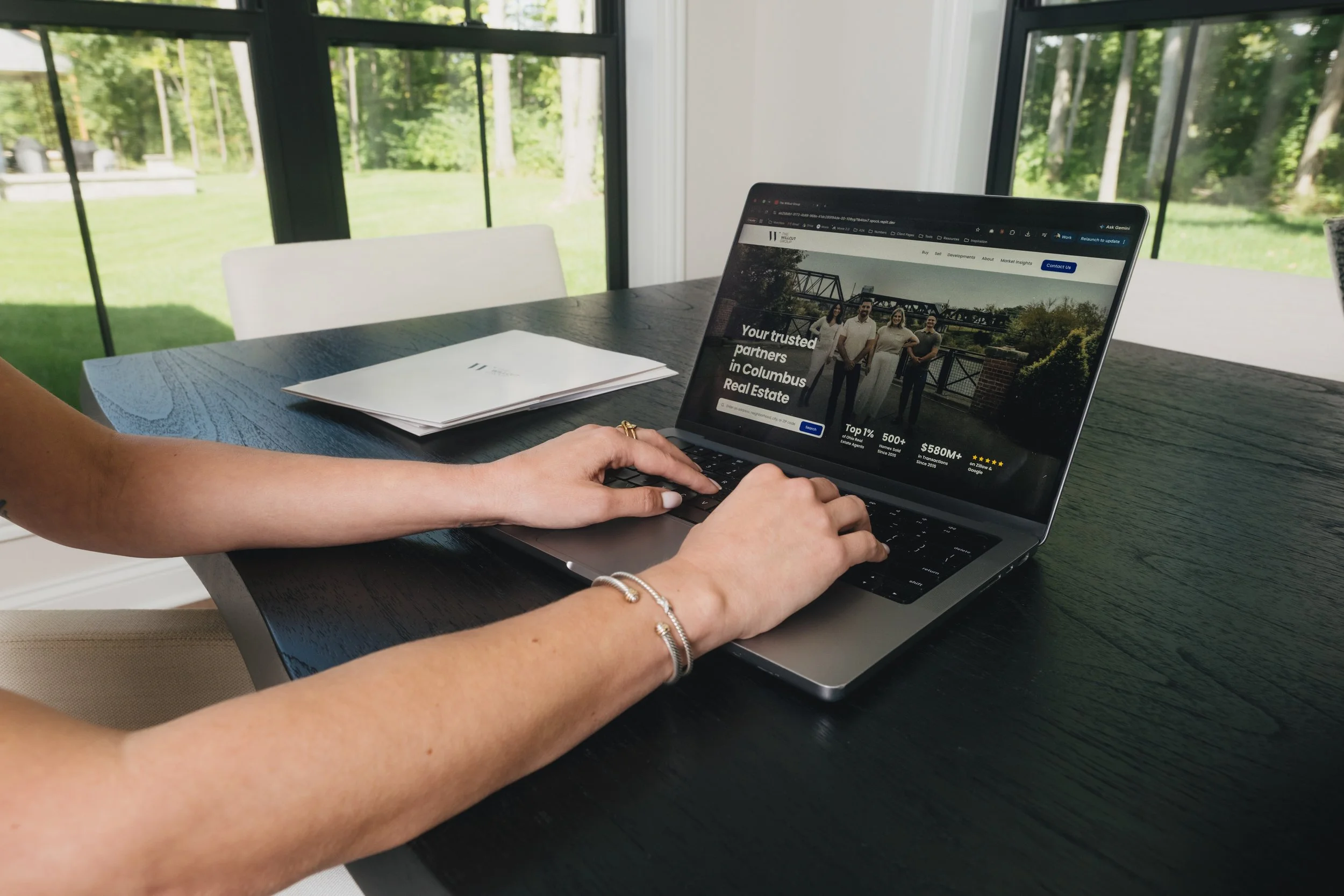
Start owning more of your local search.
The agents who own the search around the listing will have the advantage.
Showing up locally takes more than adding your city to a few pages. Our Local SEO Guide breaks down how to strengthen your visibility, target the right searches, and make it easier for nearby customers to find your business when they’re ready to act.
Related articles: